Homepage Ralph Häussler
Contact / Kontakt
  • Home
  • CV
    • Books
    • Publications
    • Publications Thematic
    • Conferences
    • Teaching HE
  • Research
    • Romanisation >
      • Becoming Roman Cisalpina
    • Globalisation
    • Creolage
    • Ancient Religion >
      • De-Romanizing Religions
      • Sacred Landscapes
      • FERCAN Britain Narbonensis
    • Democracy
    • Memory
    • Literacy
    • Roman Wales
    • Extras >
      • Spartacus
      • Boudicca
      • Sustainability
      • Migration
  • Celtic Religions
    • What is Celtic Religion >
      • Chronology
      • Iron Age religions >
        • Celtic Inscriptions
        • CelticIconography
      • Fanum
    • Celtic Deities >
      • Pilier des Nautes
      • Female Deities >
        • Celtic Supreme Goddess
        • Epona
        • Mother Goddesses
        • Thirona
      • Male Deities >
        • Taranis
        • Sucellos
        • Cernunnos
        • Ogmios
        • Lugus
      • Celtic Animal Gods >
        • Tarvos Trigaranos
        • Serpent
        • Stag
        • Birds
    • Bibliography Celtic Religions
  • Wolf
    • Wolf Today >
      • WolvesVital
      • WolfEurope
      • Wolves and Sheep
      • Wolf Protection
    • Wolf-Deities-and-Myths >
      • Wolf Myth Intro
      • Wolf-Mythology-Italy
      • Wolf-Mythology-Greek
      • Wolf-Mythology-Celtic
      • Wolf Mythologie Japan
      • Wolf Mythologie Americas
      • Wolf Mythologie Egypt
      • Wolf-Mythology Norse
    • Painted Wolf >
      • Painted Wolf Protection
      • Painted Wolf Docus
      • Zoos with Painted Wolves
    • Wolfpark and Zoos >
      • Wolf Enrichment
      • Socialised Wolves
      • Zoo Signage Beschilderung
    • Zoo "Tiergarten Worms" >
      • Wolf-Log
      • Wolf-Video-Log
      • Wolf Enclosure
  • City of Worms
    • Worms Photo Gallery >
      • Cityscape
    • Jewish Warmaisa >
      • Judengasse
      • Synagoge
      • Raschi Kapelle
      • Mikwe
      • Heiliger Sand
    • Martin Luther 1521 >
      • Luther Timeline 1521
      • LutherStätten
    • Dom zu Worms
    • Victor Hugo
    • St Martin
    • Archaeologie in Worms >
      • Stadt-Archaeologie
      • Archäologischer Park
      • Archäologie in Gefahr
    • Stadtverschandelung >
      • Herrnsheim Schloß/Palace
      • Notizen & Verschandlung
      • Dom-Verschandlung
      • Marktplatz
      • Stadtplanung und Bauklötze >
        • Bauklotz-Architektur
        • Stadtplanung
    • Lost-Heritage
    • Museum Andreasstift
    • Mittelhahntal Gewerbe
  • Railways
    • RailHeritage >
      • RailArchitecture >
        • London Bridge
        • Gare de Metz
      • Heritage Railways
      • RailMuseum
    • Aberyswyth-Carmarthen
    • RailWorms >
      • Hbf Worms1904
      • HLB 1853-1920
      • Hbf Worms
      • Bw Worms
      • Akkutriebwagen
      • Worms Hafenbahn
      • Worms Bahn Memoriae
      • Worms Güterbahnhof
      • Eistalbahn
      • Rosengarten
      • Trajekt
      • Buschbahn
      • Worms Gundheim
    • Tramways >
      • Tram Amsterdam
      • Tram Barcelona
      • Tram Basel
      • Tram Berlin
      • Tram Blackpool
      • Tram Bonn
      • Tram Bruxelles
      • Crich Tram Museum
      • Tram Darmstadt
      • Tram Dresden
      • Tram Edinburgh
      • Tram Frankfurt
      • Tram Graz
      • Tram Grenoble
      • Tram Heidelberg
      • Tram Innsbruck SLB
      • Tram Karlsruhe
      • Tram Linz
      • Tram Lisboa
      • Tram Llandudno (Gt Orme)
      • Tram London
      • Tram Lyon
      • Tram MaLu
      • Tram Manchester
      • Tram Milano
      • Tram Montpellier
      • Tram Mulhouse
      • Tram Nottingham
      • Tram OEG
      • Tram Orleans
      • Tram Paris
      • Tram Reims
      • Tram Roma
      • Tram Salzburg
      • Tram Torino
      • Tram Strasbourg
      • Tram Wien
      • Tram Wien Badner Bahn
      • Tram Worms
      • Tram Zaragoza
      • Tram Zurich
    • NarrowGauge >
      • Ffestiniog Welsh Highland
      • Pinzgau
      • Rheidol
      • Romney
      • Salzkammergut
      • Schafbergbahn
      • Somme
      • Talyllyn
      • Teifi
      • Zillertail
    • Trolleybuses
    • U-Bahn Metro
  • Epona
    • HorseDeities >
      • Horse Deities, Celtic
      • Horse Human Hybrid
      • Horses in Greek Myth
    • HorseArchaeology
    • Horsemanship Antiquity
    • Camargue
  • Pets
BACK TO MAIN MENU | RAIL HERITAGE | RAIL WORMS HBF | TRAMWAY EUROPE | NARROW GAUGE | TROLLEY | MUSEUMSBAHNEN | HOMEPAGE |
See disclaimer below.

Railway Heritage | Le patrimoine ferroviaire | Kulturerbe Eisenbahn | 鉄道遺産 | रेलवे विरासत | Patrimonio ferroviario


FURTHER PAGES| RAIL ARCHITECTURE | HERITAGE RAILWAY | RAILWAY MUSEUMS | NARROW GAUGE RAILWAYS | WEITERE SEITEN

Raising Awareness for our Railway Heritage
Sensibilisierung für unser Eisenbahnerbe | Sensibilisation pour notre patrimoine ferroviaire


Railways revolutionised the world in the 19th century. They connected people, provided fast transport for people, animals and goods. They were the backbone for the industrial revolution and facilitated the growth of population and the development of large cities. We need to preserve this amazing cultural heritage that shaped generations of people across the globe. The railway story must be told to future generations, like the amazing feasts of engineering, the astonishing railway buildings, the locomotives, bridges, tunnels... and the many railway lines that had costed hundreds or even thousands of workers their life during construction. How can we preserve the railway heritage so that we understand the evolution of the railways or the life of the people who worked for the railways over the past two centuries?
Im 19. Jh. revolutionierten Eisenbahnen die Welt. Sie verbanden Menschen, ermöglichten einen schnellen Transport von Menschen, Tieren und Gütern und sie waren das Rückgrat der industriellen Revolution und förderten die Entwicklung großer Städte. Dieses erstaunliche kulturelle Erbe, das Generationen von Menschen auf der ganzen Welt geprägt hat, gilt es zu bewahren. Die faszinierende Geschichte der Bahn muß für zukünftige Generationen erhalten werden: die erstaunlichen technischen Errungenschaften, die erreicht wurden, wie schnellere Lokomotiven, höhere Brücken und längere Tunnel, sowie der Bau von Strecken, für die Hunderte oder sogar Tausende von Arbeitern ihr Leben opferten. Wie können wir das Erbe der Eisenbahn bewahren, um die Entwicklung der Eisenbahnen oder das Leben der Menschen zu verstehen, die in den letzten zwei Jahrhunderten für die Eisenbahnen gearbeitet haben?

What is Railway Heritage?

  • Railway Heritage is part of our Industrial Heritage. Many railway structures are even UNESCO World Heritage Sites (scroll down for more information)
  • Railway Heritage inculdes, among others:
    • Infrastructure, like railway stations, signal boxes, good sheds, loco sheds, depots, bridges, viaducts, tunnels, etc.
    • Vehicles: locomotives, motor units, carriages, wagons, etc. - from the ordinary to the special, the award winning high speed locos and trains, like Mallard, Shinkansen and TGV...
    • Railway Knowledge: this is the ever changing railway know-how on, for example, how to run a railway, how to operate a steam locomotive, how the signalling works, and many more. Much of this knowledge depends on us preserving old and current literature, from timetables, leaflets, to railway handbooks and staff guidelines. In our virtual times, timetables become even more vulnerable since one is merely consulting an Internet database. How can one check what the timetable was just a few years ago? It's easier for the 19th or 20th century. And how to preserve oral knowledge?
    • Railway Culture: railways have been an important factor in people's lives in the past 200 years, whether the new holiday resorts that developed in the 19th century thanks to the railway, or the role of trains in wars, or the famous trains who were immortalised in literature, like the Orient Express.
    • Material Evidence: Apart from building and vehicles, it is also essential to collect material artefacts, from old signals to signposts, as well as literary evidence, like timetables, posters or staff rota, and entire archives of railway companies.
  • Preservation of our Railway Heritage:
    • Preservations takes many forms, like listing buildings as cultural heritage (e.g. railway stations, round houses, etc.), the collections in museums or railway societies, the various heritage railways that provide a re-enactment of a once gone era whilst preserving a railway line for future generation, as well as the collection of archives.
    • This also leads us to railway archaeology. Many former railway sites are being re-used and the archaeology can reveal, for example, 19th century railway structures that had been forgotten...
This page is work in progress at the moment. The aim will be to raise awareness of railway heritage across Europe and to provide further links and information on preserving railway heritage (and to show threats and the destruction of railway heritage).

Was ist das Kulturerbe Eisenbahn?

  • Das Eisenbahnerbe ist Teil unseres Industrieerbes. Viele Eisenbahn-Strecken und Kunstbautengehören sogar zum UNESCO-Weltkulturerbe (siehe unten)
  •     Das Eisenbahnerbe umfasst unter anderem:
    • Infrastruktur wie Bahnhöfe, Stellwerke, Güterbahnhöfe, Lokschuppen, Bahnbetriebswerke, Brücken, Viadukte, Tunnel usw.
    • Fahrzeuge: Lokomotiven, Triebwagen, Personenwagen, Güterwagen... - von den alltäglichen bis zu den außergewöhnlichen, wie die preisgekrönten Hochgeschwindigkeitsloks und -züge (Mallard, Shinkansen und TGV...)
    • Eisenbahnwissen: Dazu zählt das sich ständig ändernde Eisenbahn-Know-how, z.B. wie man eine Eisenbahn betreibt, wie man eine Dampflokomotive bedient, wie die Signale funktionieren, u.v.a.m. Wir wissen viel über das 20. Jh., aber wie war es denn im 19. Jh.? Viele Unterlagen sind verloren. Ein Großteil unseres Wissens hängt davon ab, dass wir alte und aktuelle Literatur aufbewahren, von Fahrplänen, Flugblättern, Postern bis hin zu Eisenbahnhandbüchern und Personalrichtlinien. In unserer virtuellen Zeit wird die Erhaltung noch problematischer, da man für vieles nur noch das Internet konsultiert. Wie kann man überprüfen, wie der Fahrplan noch vor wenigen Jahren war? Für das 19. oder 20. Jahrhundert ist es einfacher. Und wie kann man mündliches Wissen bewahren?
    • Eisenbahnkultur: Eisenbahnen spielten in den letzten 200 Jahren eine entscheidende Rolle im Leben der Menschen. Da sind die neuen Urlaubsorte und Seebäder, die sich im 19. Jahrhundert dank der Eisenbahn entwickelten, oder die Rolle der Eisenbahn im Krieg. Und nicht zuletzt gibt es die  berühmten Zügen, die literarisch verewigt wurden, wie der Orient Express.
    • Materielle Funde: Neben Gebäuden und Fahrzeugen ist es auch wichtig, materielle Artefakte, von alten Signalen bis zu Plakaten, Wegweisern, sowie literarische Beweise und ganze Archive von Eisenbahnunternehmen zu sammeln.
  • Bewahrung unseres Eisenbahnerbes:
    • Die Erhaltung hat viele Formen, wie die Auflistung von Gebäuden als kulturelles Erbe (z. B. Bahnhöfe, Ringlokschippen, usw.), die Sammlungen in Museen oder von Museumsbahnen, die eine längst vergangene Ära dem Pubikum präsentieren und zugleich stillgelegte Bahnstrecken für zukünftige Generation erhalten.
    • Dies führt uns auch zur Eisenbahnarchäologie. Viele ehemalige Bahnhöfe werden wiederverwendet und die Archäologie kann zum Beispiel vergessene Eisenbahnstrukturen aus dem 19. Jahrhundert aufdecken ...
Wie so oft ist auch diese Seite gerade im Aufbau... Bald wird es mehr Informationen zum Eisenbahnerbe geben... Bitte etwas Geduld.

Railways as UNESCO World Heritage Sites | Eisenbahnen als Weltkulturerbe | Le patrimoine mondiale ferroviaire
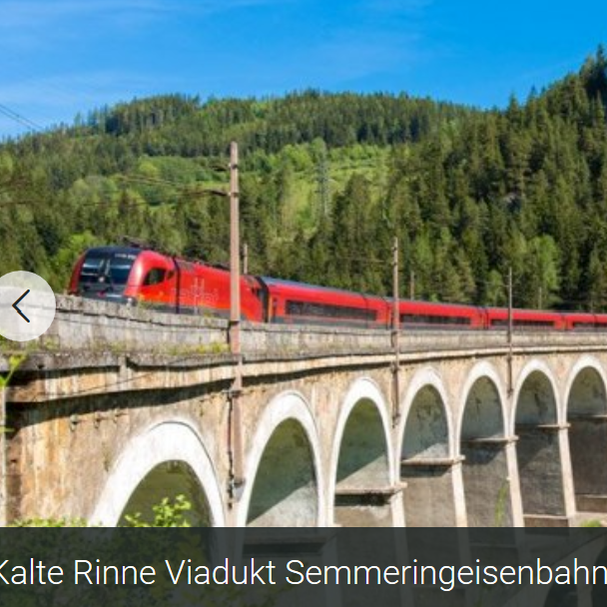
UNESECO World Heritage / Weltkulturerbe:  SEMMERING EISENBAHN (A) Railway Alps, Austria
UNESECO World Heritage / Weltkulturerbe: SEMMERING EISENBAHN (A): since/seit 1998, 41km incl. tunnels, viaducts, stations...
Und hier noch ein Link | another link: www.semmeringbahn.at/
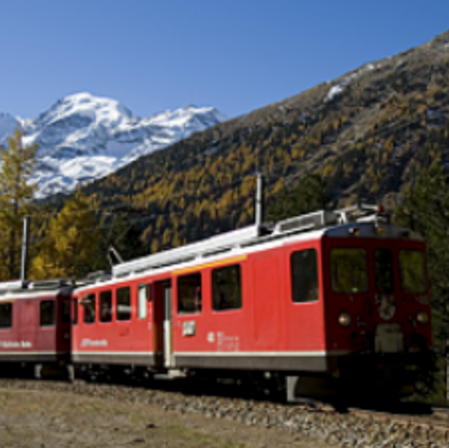
Since 2008, World Heritage Railway 'RHAETIAN RAILWAY' (CH) // Weltkulturerbe RHAETISCHE BAHN // CdF rhétiques
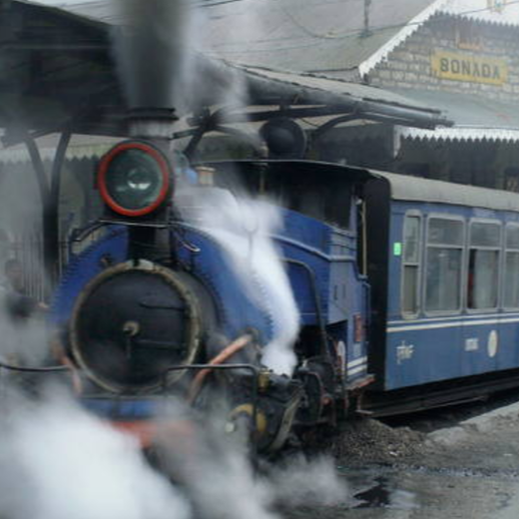
DARJEELING MOUNTAIN RAILWAY (UNESCO World Heritage Site)

For a list of operating heritage railways, see Wikipedia Site | Für Museumseisenbahnen, siehe detaillierten Überblick auf Wikipedia.de.

BACK TO MAIN MENU | RAIL HERITAGE | RAIL WORMS HBF | TRAMWAY EUROPE | NARROW GAUGE | TROLLEY | MUSEUMSBAHNEN | HOMEPAGE |
Disclaimer: please surf at your own risk...
The information contained in this website is for general information purposes only. I endeavour to keep the information up-to-date and correct, but I cannot guarantee its completeness, accuracy, reliability or suitability. I am not responsible for any action taken as a result of the information or advice on my website.
Through this website you are able to link to other, external websites which are not under my control; these links are being provided as a convenience and for informational purposes only; the inclusion of any links does not necessarily imply a recommendation or endorse the views expressed within them, and I bear no responsibility for the accuracy, legality or content of the external site or for that of subsequent links. Contact the external site for answers to questions regarding its content.
Copyright: The content of this website is protected by copyright. No portion of this website may be copied or replicated in any form without the written consent of the website owner.

Powered by Create your own unique website with customizable templates.